If you buy Hi-Chew in the United States, you are buying a candy made in North Carolina. Morinaga has produced Hi-Chew at its plant in Mebane since 2015, and it’s building a second plant next door, which means the American range is designed for American shelves rather than shipped over from Japan. That range is also bigger than Japan’s, running to roughly forty flavours including cotton candy, mai tai, key lime pie and orange creamsicle.
So the interesting Japanese flavours aren’t the everyday ones. They’re the twelve regional souvenir flavours that Morinaga sells in one part of Japan and nowhere else, plus a set of texture variants and short-run limited flavours that never reach the overseas lineup. This guide covers all of them.
Japanese Snacks, Direct From Japan
kachicollect only carries products made for the Japanese market. No proxy fees, and duties are shown before you pay.
Shop on kachicollectWhy US Hi-Chew Isn’t the Same Product as Japanese Hi-Chew
Morinaga started making Hi-Chew in the United States in 2015, at a plant in Mebane, North Carolina. Demand grew fast enough that in 2024 the company announced a second plant on the adjacent site, a 136 million dollar investment that will roughly double capacity when it starts up in January 2027. US sales have grown by more than 20% a year since 2018.
That matters for anyone comparing flavours. The American lineup was built for American tastes, and it shows: açaí, cotton candy, mai tai, piña colada, key lime pie, rainbow sherbet, orange creamsicle, mango chamoy, strawberry lemonade. Japan’s everyday lineup is narrower and plainer by comparison, built around grape, strawberry, sour lemon and green apple.
Read that the wrong way and you’d conclude Japan has less to offer. The opposite is true, but the difference sits in two places the overseas range doesn’t touch: regional souvenir flavours tied to a single part of the country, and sub-lines built around texture rather than flavour. Morinaga describes Hi-Chew as holding the largest share of the soft candy market in Japan, and the regional line is a big part of how it stays there. We also cover Hi-Chew as one of our 15 best Japanese candies.
Omiyage Hi-Chew: 12 Flavours Sold in One Region Only
Morinaga runs a souvenir line, Omiyage Hi-Chew, made with fruit from specific parts of Japan and sold only in that area. The company’s own description of where to find them is precise: airports, stations, roadside stands and shops that deal in souvenirs. You won’t find these in a Tokyo convenience store unless the flavour happens to be the Tokyo-area one.
Almost all of them come as a multipack of five packets with 12 pieces each, which makes them an obvious gift rather than a single-serving snack. Morinaga sells these at open price, so what you pay depends on the shop.
| # | Flavour | Where it’s sold | Fruit used |
|---|---|---|---|
| 1 | Yubari Melon | Hokkaido | Hokkaido Yubari melon |
| 2 | Hokkaido Yogurt | Hokkaido | Hokkaido milk |
| 3 | Tohoku Apple | Tohoku | Tohoku red apple juice |
| 4 | Shinshu Apple | Tokyo area | Shinshu apple |
| 5 | Mt. Fuji Assorted Pack | Tokyo area, Chubu, Kansai | Yamanashi peach, Shizuoka Crown melon |
| 6 | Mixed Juice | Kansai | Based on Osaka mixed juice |
| 7 | Setonai Lemon | Chugoku, Shikoku | Setonai lemon juice |
| 8 | Amaou Strawberry | Kyushu | Fukuoka Amaou strawberry juice |
| 9 | Shequasar | Okinawa | Shikuwasa citrus |
| 10 | Pineapple | Okinawa | Okinawan pineapple juice |
| 11 | Mango | Okinawa | Okinawan mango juice |
| 12 | Banana and Lilikoi | Hawaii, ABC Stores only | Banana, passion fruit |
1. Yubari Melon (Hokkaido)
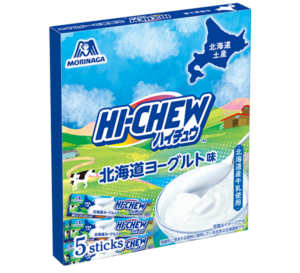
Yubari melon is the orange-fleshed cantaloupe from Hokkaido that turns up in news stories for selling as a matched pair at auction prices, and it’s the most recognisable name in the regional line. Morinaga describes this one simply as Hi-Chew using the fragrant Hokkaido melon. It comes as five packets of 12 pieces and is sold across Hokkaido at airports, stations and souvenir shops.
2. Hokkaido Yogurt (Hokkaido)
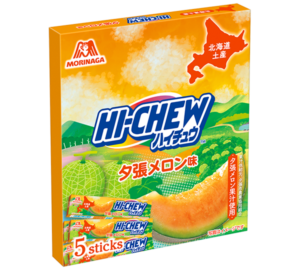
The second Hokkaido flavour skips fruit entirely. It’s made with Hokkaido milk and aims for the smooth richness of yogurt with a refreshing tang, which makes it the outlier in a line otherwise built on regional fruit. If you’re buying two things in Hokkaido, this is the one people are less likely to have tried.
3. Tohoku Apple (Tohoku)
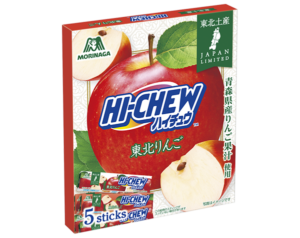
Tohoku is Japan’s apple region, and this version uses juice from Tohoku red apples for a balance of sweet and refreshing. It’s sold through the Tohoku region only, and it’s worth noting it isn’t the same product as the Shinshu apple flavour below, which comes from a different growing area and is sold in a different part of the country.
4. Shinshu Apple (Tokyo Area)
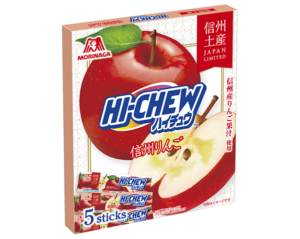
Shinshu is the old name for the Nagano area, and its apples have their own reputation in Japan. Morinaga puts this flavour on sale in the Tokyo area rather than in Nagano itself, which is the kind of distribution quirk that makes the regional line confusing to shop. If you’re flying out of Haneda or Narita, this is one of the two you can reach.
5. Mt. Fuji Assorted Pack (Tokyo Area, Chubu, Kansai)
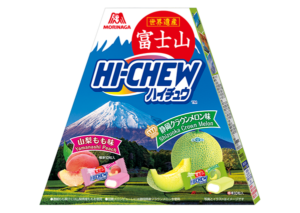
This is the only regional product sold as an 86g assorted bag rather than a multipack, and the only one with two flavours in the box: peach from Yamanashi and Crown melon from Shizuoka, the two prefectures either side of Mt. Fuji. Shizuoka Crown melon is a premium gift melon in its own right. It has the widest distribution of the regional range, covering the Tokyo area, Chubu and Kansai.
6. Mixed Juice (Kansai)
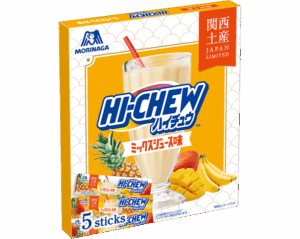
This one needs explaining if you haven’t spent time in Osaka. Mixed juice is a blended fruit drink served in the city’s old-style coffee shops, usually banana, apple, citrus and milk, and it functions as a piece of local food culture rather than a fruit. Morinaga calls this a souvenir-exclusive Hi-Chew that recreates that sweet, nostalgic taste, and it’s the flavour on this list you are least likely to be able to guess from the name.
7. Setonai Lemon (Chugoku, Shikoku)
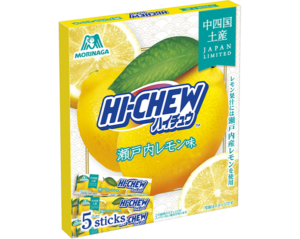
The Seto Inland Sea area grows lemons on a scale unusual for Japan, and Setonai lemon has become a standard flavour label on everything from sours to cakes. This Hi-Chew uses that juice for fragrance and a measured amount of sourness, and it’s sold across the Chugoku and Shikoku regions.
8. Amaou Strawberry (Kyushu)
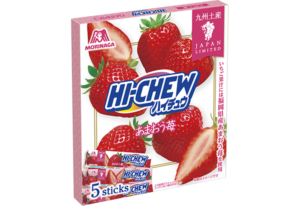
Amaou is Fukuoka’s premium strawberry variety, large and deep red, and it’s the strawberry Japanese confectioners reach for when they want a name on the package. The Hi-Chew version uses Amaou juice and leans on the fruit’s aroma. It’s sold throughout Kyushu.
9. Shequasar (Okinawa)
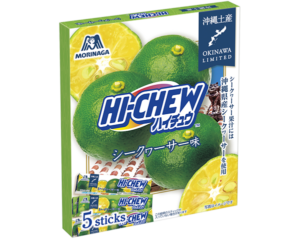
Shikuwasa, romanised as Shequasar on the package, is a small, sharp Okinawan citrus that is usually drunk as a juice rather than eaten. It’s tart in a way no flavour in the overseas lineup is, and of the three Okinawan flavours it’s the one that tastes most specifically like the place. Sold in Okinawa only.
10. Pineapple (Okinawa)
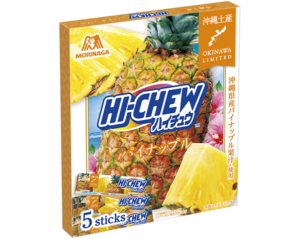
Okinawa grows pineapple commercially, which mainland Japan does not, so the fruit reads as an Okinawan speciality locally even though pineapple is ordinary everywhere else. This version uses Okinawan pineapple juice for a sweet and sour finish. Note that the US lineup also has a pineapple Hi-Chew, so this is a case where you need to read the package rather than the flavour name.
11. Mango (Okinawa)
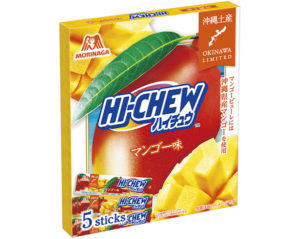
The third Okinawan flavour uses Okinawan mango juice, aiming for a rich sweetness with a fresh aroma. Mango also exists in the American range and in Japan’s national premium line, so again the regional version is identified by where you bought it rather than by the name on the front.
12. Banana and Lilikoi (Hawaii, ABC Stores Only)
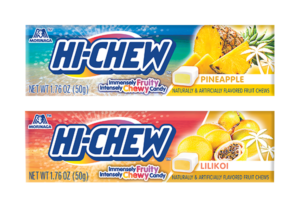
The oddest entry on Morinaga’s souvenir page isn’t in Japan at all. This banana and lilikoi pack, lilikoi being the Hawaiian word for passion fruit, is sold only at ABC Stores in Hawaii. It sits on the same official souvenir list as the Japanese regional flavours, which tells you Morinaga treats Hawaii as a souvenir market in the same way it treats Okinawa.
Found a Flavour You Want?
Send us the link for an instant quote. You pay the item price plus shipping, and duties are shown before checkout.
Shop on kachicollectThe Texture Sub-Lines That Don’t Exist Abroad
The other thing Japan has that the overseas range doesn’t is a set of variants that change the chew rather than the flavour. Japanese confectionery marketing treats texture as a product category in its own right, and Hi-Chew has more of these than almost any candy brand.
Suppaichu is the sour line, named by swapping the first syllable of Hi-Chew for the word for sour. The standard version is sour lemon with added vitamin C and citric acid, and a premium version released in February 2026 combines the usual chewiness with a crisp, fizzy layer.
Umaichu uses the same naming trick with the word for tasty, and covers the green apple flavour.
Hi-Chew Premium is the thicker, chewier line, and it’s where Japanese fruit varieties show up nationally rather than regionally. Kyoho grape comes in a 35g pack, and a ripe mango version released in April 2026 uses Alphonso mango juice with what Morinaga calls an ultra-chewy texture.
Tsubutsubu means the sensation of small bits, and these put fruit pieces inside the chew so you get granular texture alongside the flavour.
Hi-Chew Mini went the other direction entirely with a reformulation in February 2026, aiming for a crisp, hard bite rather than a soft one, in carbonated drink flavours.
Colo Colo are small spheres instead of the usual rectangles, in grape, strawberry, melon and soda.
Pouch formats carry the fizzy flavours: soda, energy drink, cola and grape squash in a 60g bag, with a smaller mini pouch added in July 2026.
Limited-Run Flavours From 2026
Japan gets several short-run Hi-Chew releases a year, sold until the production run ends and then dropped. The standard stick format is 12 pieces, and Morinaga lists these at open price.
| Product | Release date | What’s in it |
|---|---|---|
| Tsubutsubu Berry Mix | 17 February 2026 | Raspberry, blue raspberry and blueberry in one piece, with fruit bits |
| Suppaichu Premium Lemon | 17 February 2026 | Chewy texture plus a crisp, fizzy sensation |
| Hi-Chew Mini (reformulated) | Mid-February 2026 | Crisp, hard bite, carbonated drink flavours |
| Tsubutsubu Tropical Mix | 28 April 2026 | Passion fruit, guava and dragon fruit in one piece |
| Premium Ripe Mango | 28 April 2026 | Alphonso mango juice, ultra-chewy |
| Mini Pouch | Mid-July 2026 | Smaller pouch format |
| Double Web | 28 July 2026 | Film tie-in: red apple outside, blue blueberry inside, two package designs |
Tsubutsubu Berry Mix
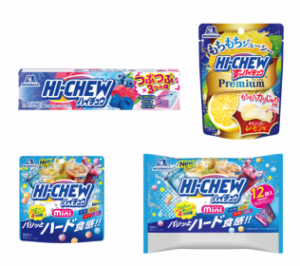
Three berries in a single piece is unusual even by Hi-Chew standards: raspberry, blue raspberry and blueberry, with fruit bits through the chew. It came out on 17 February 2026 as a 12-piece stick. Blue raspberry is a flavour more associated with American candy than Japanese, which makes its appearance in a Japan-only release slightly ironic.
Tsubutsubu Tropical Mix
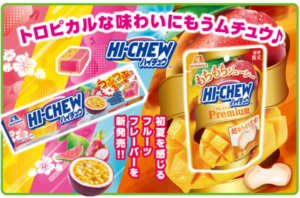
The April follow-up used the same three-in-one approach with passion fruit, guava and dragon fruit. Released 28 April 2026, also a 12-piece stick. Dragon fruit in particular almost never appears in Japanese candy, so this is the kind of release that disappears before most people abroad hear about it.
The Spider-Man Tie-In
Morinaga also released a film tie-in on 28 July 2026 called Double Web, with a red apple layer outside and a blue blueberry layer inside to match the character’s colours, in two package designs. Japan treats 12 August as Hi-Chew Day, and the brand marked its 50th anniversary in 2025 with a release called Odo Mix, the first in the brand’s history to put three flavours into one piece.
How to Buy Japan-Only Hi-Chew From Outside Japan
Order From the kachicollect Catalog
kachicollect is a Japan-based shop that only carries products made for the Japanese market. The catalog covers Japanese candy, gummies, KitKat, tea and beauty products, and it’s the simplest starting point because everything listed is already sourced and priced.
You pay the listed price plus shipping, with no proxy fees, and the total including duties is shown at checkout before you pay. Payment is in your local currency by Visa, Mastercard or JCB, so you don’t need a Japanese address or card, and orders ship worldwide with tracking in about 7 to 14 days. Our comparison of where to buy Japanese snacks online covers the alternatives in more detail.
Request a Regional Flavour
The regional flavours are the reason to use this. Each one is tied to airports, stations and souvenir shops in one area, so there is no single Japanese site that stocks all twelve. Send us the link to the flavour you want from a Japanese site and you’ll get an instant quote, then buy it directly on kachicollect with no service fees. The same applies to any limited-run flavour still in stock.
eBay
Regional Hi-Chew shows up on eBay, often as single multipacks at a markup that reflects how far the seller had to travel to buy it. Because these are dated products and the texture is the point, check the seller’s feedback and ask for a photo of the date printed on the pack before you commit.
Amazon
Amazon carries the American range, which is made in North Carolina and easy to buy, but the regional Japanese flavours rarely appear. When they do, they’re listed by third-party sellers rather than the brand, so prices and freshness vary.
Tips Before You Buy
Check the package, not the flavour name. Pineapple, mango and strawberry exist in both the American and Japanese ranges. The Japanese packs carry Japanese text and the regional ones name the growing area, which is the reliable way to tell them apart.
Regional means regional. Morinaga sells these at airports, stations, roadside stands and souvenir shops in one area only. Shinshu apple is sold in the Tokyo area, not in Nagano, so distribution doesn’t always follow the fruit.
Most are multipacks. Eleven of the twelve regional flavours come as five packets of 12 pieces, which is a lot of candy if you only wanted to taste one. The Mt. Fuji assorted pack at 86g is the smaller option.
Limited runs don’t come back. The 2026 seasonal flavours were produced once. Once a run sells through, the flavour is gone rather than restocked.
Watch the heat. Hi-Chew is a soft chew, and pieces stick together and lose their shape in transit through hot weather. Summer orders arrive less tidy.
Frequently Asked Questions
Is Hi-Chew a Japanese candy?
Yes. It’s made by Morinaga and Morinaga describes it as holding the largest share of Japan’s soft candy market. The American products are made by Morinaga’s US operation at its North Carolina plant, so they’re the same brand produced locally rather than imported.
Why are the US Hi-Chew flavours different from Japan’s?
Because the US range is developed for US shelves. That’s how you get cotton candy, mai tai, key lime pie and orange creamsicle, none of which are part of the Japanese lineup. Japan’s distinctive flavours are its regional souvenir range and its short-run limited releases.
Where do you buy regional Hi-Chew in Japan?
Airports, train stations, roadside stands and souvenir shops in the relevant region, which is how Morinaga itself describes the distribution. You can’t reliably buy the Okinawan flavours in Tokyo or the Hokkaido flavours in Osaka.
What is Suppaichu?
Suppaichu is Hi-Chew’s sour sub-line, named by replacing the first part of the brand name with the Japanese word for sour. The standard version is sour lemon with vitamin C and citric acid, and a premium version arrived in February 2026.
How much does Japanese Hi-Chew cost?
Morinaga lists these at open price, meaning it doesn’t set a suggested retail price, so the shelf price varies between shops and between an airport and a supermarket.
Conclusion
Hi-Chew is one of the rare cases where the overseas version has more flavours than the Japanese one, and it’s still worth buying from Japan. The twelve regional flavours are tied to one part of the country each, built on named local fruit, and sold through souvenir channels that no overseas retailer reaches. Add the texture sub-lines and the limited runs and the Japanese shelf looks nothing like the American one.
The practical way in is to pick a flavour and send us the link, since no single Japanese shop carries all twelve. You pay the item price plus shipping with no proxy fees, see the total including duties before checkout, and first-time customers can use the code WELCOME20 for 20% off.
Order Japanese Snacks From Japan
Products made for the Japanese market, shipped worldwide with tracking in about 7 to 14 days. Use code WELCOME20 for 20% off your first order.
Shop Now at kachicollect