Cororo is the Japanese gummy people peel on camera. The pieces are wrapped in a thin collagen skin that comes away like the skin of a real grape, and that one detail turned a supermarket candy into a recurring TikTok clip. What most of those videos don’t mention is that the flavours sold abroad and the flavours sold in Japan are not the same products.
This guide covers what makes the texture work, why it went viral, every Cororo flavour currently sold in Japanese shops, and how the overseas lineup differs. If you’ve only tried the Grape and Peach versions sold in your own country, the Japanese shelf looks noticeably different.
Cororo, Direct From Japan
Kyoho grape and Shine Muscat are in our catalog right now. No proxy fees, and duties are shown before you pay.
Shop on kachicollectWhat Makes Cororo Different From a Normal Gummy
Cororo is made by UHA Mikakuto, and the company is blunt about what it’s selling: its own description says the number one characteristic of Cororo is texture. A juicy gummy centre is wrapped in a springy collagen membrane, and biting through that membrane gives a short pop before the centre gives way. It behaves less like a chewy sweet and more like a peeled grape.
Later versions added fruit extract to the recipe, so the aim is now both the pop and a fuller fruit taste. Some flavours go further and include small jelly beads inside the piece that stand in for seeds, which is the part that surprises people the first time they bite one. You’ll also see the brand written as Kororo in English, and both spellings refer to the same product; we cover it as one of our 15 best Japanese gummies as well.
Why Cororo Went Viral: The Peeling Trend
The collagen skin is what made Cororo a video format rather than just a snack. Peeling a piece before eating it looks like peeling fruit, and clips tagged #peelinggummies pass the same trick between accounts. The usual line in those videos is that the texture works whether you peel it or not, and that the muscat version tastes like the real grape.
UHA Mikakuto has leaned into that. The brand runs its own TikTok account, its US marketing pushes the hashtag #PopWithCORORO, and in Japan it runs a campaign called the BUZZ Cororo PROJECT with the group THE RAMPAGE, whose member Kazuma Kawamura fronts the current television advert. It’s worth knowing that some of the larger creator posts carry an #ad disclosure, so the trend is part organic and part campaign.
Cororo Flavours Sold in Japanese Shops
UHA Mikakuto’s Japanese product catalogue currently lists five Cororo flavours. Four of them are named after specific Japanese fruit varieties rather than generic fruit, which is the detail that matters if you’re comparing shelves between countries.
| Flavour | Fruit used | Pack size | Calories per pack |
|---|---|---|---|
| Kyoho grape | Concentrated Kyoho grape juice with grape extract | 48g | 132 kcal |
| Shine Muscat | Shine Muscat juice with grape extract | 48g | 131 kcal |
| Shimizu white peach | White peach purée with peach extract | 40g | 109 kcal |
| Twentieth Century pear | Pear juice with pear flesh | 40g | 109 kcal |
| Watermelon | Watermelon | 40g | 109 kcal |
On UHA Mikakuto’s own online store, a single bag is ¥160. There is also a Cororo Sour in green apple at ¥192 a bag, sold through that store rather than listed in the main catalogue.
Kyoho Grape
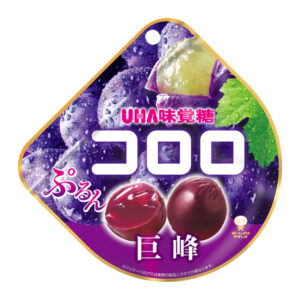
Kyoho is the large, dark, thick-skinned grape that Japan treats as its benchmark variety, and this is the flavour that built Cororo’s reputation. It uses concentrated Kyoho juice plus grape extract, and at 48g it’s one of the two larger bags in the range. If you buy one flavour to understand what people mean by the peeling trend, buy this one.
Shine Muscat
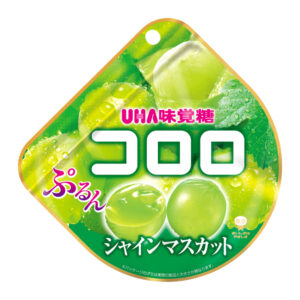
Shine Muscat is the green, seedless, aromatic grape that has become the expensive gift fruit in Japan, and it’s the flavour most often named in overseas videos. The Cororo version uses Shine Muscat juice with grape extract, in a 48g bag at 131 kcal. It reads sweeter and more floral than the Kyoho, with less of the dark grape depth.
Shimizu White Peach
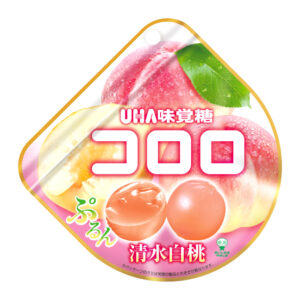
This one swaps juice for purée: it uses white peach purée with peach extract, which gives a softer, rounder centre than the grape flavours. Shimizu Hakuto is a white peach variety grown in Okayama and sold as a premium summer fruit, so the reference is to a specific peach rather than peach in general. The bag is 40g at 109 kcal.
Twentieth Century Pear
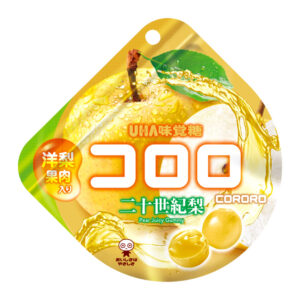
Nijisseiki, meaning twentieth century, is the pale green Japanese pear that Tottori is known for, and it’s the flavour hardest to find outside Japan because the fruit itself is barely exported. Cororo uses pear juice with pear flesh, so the texture carries a faint grain that mimics the crispness of a nashi pear. It comes in a 40g bag at 109 kcal.
Watermelon
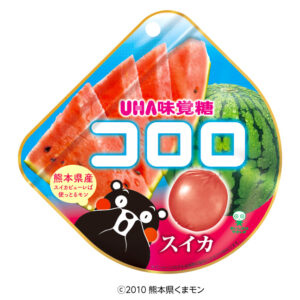
Watermelon is the outlier in the Japanese lineup, since it’s a generic fruit name rather than a named variety, and it’s also one of the flavours sold overseas. It’s a 40g bag at 109 kcal. If you want a straightforward comparison between the Japanese and overseas versions of the same flavour, this is the one to try side by side.
The Flavours You Get Abroad Are Not the Same
This is the part worth knowing before you order. UHA Mikakuto’s US site sells seven Cororo flavours, so the overseas range isn’t smaller. It’s specified differently.
| Sold on UHA Mikakuto’s US site | Sold in Japanese shops |
|---|---|
| Grape (48g) | Kyoho grape (48g) |
| Shine Muscat Grape (48g) | Shine Muscat (48g) |
| Peach (40g) | Shimizu white peach (40g) |
| Watermelon (40g) | Watermelon (40g) |
| Strawberry (40g) | — |
| Cola (40g) | — |
| Ramune Soda (40g) | — |
| — | Twentieth Century pear (40g) |
| — | Cororo Sour green apple |
Read down the two columns and the pattern is clear. The overseas lineup leans on flavours that travel easily, including cola and ramune soda, and describes its fruit generically as grape, peach and strawberry. The Japanese lineup names the cultivar: Kyoho, Shine Muscat, Shimizu white peach, Nijisseiki pear. Shine Muscat is the one flavour that keeps its variety name in both markets, because the name itself has become the selling point.
So the honest summary is not that Cororo is impossible to get abroad. It’s that if you want the pear, the named white peach or the green apple sour, you’re buying from Japan. For more on getting Japanese snacks generally, see our comparison of where to buy Japanese snacks online.
Japan-Only Snacks, Already in Stock
Our catalog carries products made for the Japanese market, with the total including duties shown before checkout.
Shop on kachicollectThere’s Also a Cororo Specialty Store in Osaka
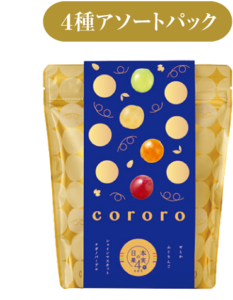
Worth knowing about, though it isn’t something you can order. UHA Mikakuto runs a single cororo specialty store in the basement confectionery floor of the Hankyu Umeda main store in Osaka, selling a separate, more expensive line: larger pieces in small 8-piece boxes at ¥648, with a four-flavour assortment at ¥1,296. The flavours are tied to named growing regions, such as Setoka citrus from Ehime and Fuji apple from Yamagata, and they rotate roughly four times a year.
Two things put it out of reach for most people. The boxes keep for 60 days from production and the store limits how many you can buy, and the seasonal flavours are retired rather than restocked. If you’re travelling through Osaka it’s a genuine stop; if you’re ordering from abroad, the supermarket flavours above are the practical choice.
How to Buy Cororo From Outside Japan
Order From the kachicollect Catalog
kachicollect is a Japan-based shop that only carries products made for the Japanese market, and Cororo is one of the cases where the item is already on the shelf. Both Cororo Kyoho Grape and Cororo Shine Muscat are listed in the catalog at ₱76 a bag, alongside other Japanese gummies, KitKat, tea and beauty products.
You pay the listed price plus shipping, with no proxy fees, and the total including duties is shown at checkout before you pay. Payment is in your local currency by Visa, Mastercard or JCB, so you don’t need a Japanese address or card, and orders ship worldwide with tracking in about 7 to 14 days.
Request Anything That Isn’t in the Catalog
If you want a flavour we don’t currently list, such as the Twentieth Century pear or the green apple sour, send us the product link from a Japanese site and you’ll get an instant quote, then buy it directly on kachicollect with no service fees. The same applies to anything else you find on a Japanese marketplace.
eBay
Cororo turns up on eBay, usually as multi-bag lots at a reseller markup. The thing to watch with any imported gummy is how long it has been sitting in a listing, because these are dated products and the texture is the entire point. Check the seller’s feedback and ask for a photo of the date printed on the bag.
Amazon
Amazon carries the flavours that have an official overseas release, which means grape, Shine Muscat, peach and the soda varieties rather than the Japan-only ones. Listings are usually from third-party sellers, so prices and freshness vary, and the Japanese-market flavours rarely appear at all.
Tips Before You Buy
Read the variety name, not just the fruit. Grape and Kyoho grape are different products, and so are peach and Shimizu white peach. The Japanese packaging names the cultivar, which is the quickest way to tell which version you’re looking at.
Buy fresh if you care about the pop. The collagen skin and the juicy centre are what you’re paying for, and both are best on a recent production date. Older stock turns chewier and loses the snap.
Watch the heat. Gummies soften and stick together in transit through hot weather. If you’re ordering in summer, it’s worth expecting a less tidy bag.
Try two flavours side by side. The grape flavours come in 48g bags and the rest in 40g, and the difference between Kyoho and Shine Muscat is the clearest demonstration of what the range is doing.
Don’t count on the specialty line. The Osaka store’s boxes are limited in quantity, keep for 60 days and aren’t restocked once a season ends.
Frequently Asked Questions
Is Cororo the same thing as Kororo?
Yes. The brand is written cororo or CORORO officially, and Kororo is a common alternative romanisation of the Japanese name. Both refer to the same UHA Mikakuto gummy.
Why do people peel Cororo gummies?
Each piece has a thin collagen membrane around a juicy centre, and it can be peeled away like the skin of a grape. That’s the origin of the peeling videos, and the brand’s own selling point is the pop you get when you bite through the membrane instead.
Which Cororo flavours can you only get in Japan?
Twentieth Century pear and the Cororo Sour in green apple aren’t part of the official overseas lineup, and the Japanese versions of the grape and peach flavours are specified by variety rather than sold as generic grape and peach.
Does Cororo have real fruit juice in it?
The ingredients name concentrated fruit juices, purées and fruit extracts, and UHA Mikakuto describes the pieces as packed with juice. The company doesn’t publish a juice percentage, so treat any specific figure you see quoted online with caution.
How many Cororo flavours are there?
Five are listed in UHA Mikakuto’s Japanese catalogue, plus a green apple sour on its own online store, and seven on its US site. The Osaka specialty store runs a separate line of six that changes with the seasons.
Conclusion
Cororo earned its attention honestly: the collagen skin really does peel, and the named-variety flavours really do taste closer to the fruit than a normal gummy. The catch is that the version most people abroad have tried is the generic one, and the Kyoho, Shimizu white peach and Nijisseiki pear versions are sitting on Japanese shelves.
Two of them are already in our catalog, so the simplest route is to order Kyoho grape and Shine Muscat directly and compare them against whatever you can buy locally. Anything we don’t list, including the pear and the green apple sour, can be requested with a link. You pay the item price plus shipping with no proxy fees, see the total including duties before checkout, and first-time customers can use the code WELCOME20 for 20% off.
Get Cororo From Japan
Kyoho grape and Shine Muscat in stock now, shipped worldwide with tracking in about 7 to 14 days. Use code WELCOME20 for 20% off your first order.
Shop Now at kachicollect