A bag labelled “matcha powder” in Japan can be one of several quite different things. Some are sweetened mixes that turn into a milky latte the moment you add hot water. Some contain no sugar and no milk at all and are meant to be whisked. They sit next to each other, they all say matcha on the front, and they are not interchangeable.
This guide sorts them out: what matcha actually is, what types of powder Japan sells, how to tell them apart from the ingredient list, and what to do with each one once you have it.
Japanese Tea, Direct From Japan
kachicollect only carries products made for the Japanese market. No proxy fees, and duties are shown before you pay.
Shop on kachicollectWhat Matcha Powder Is
Matcha has a narrow definition in Japan. The Japan Tea Association defines it as tencha ground into a fine powder with a tea mill. Tencha is made by covering the tea bushes for roughly two to three weeks before picking, steaming the leaves, and then drying them without rolling them — the rolling step that every other Japanese green tea goes through is skipped. Grinding is slow: a stone mill produces only about 40 g an hour.
That definition is narrow enough that the international standards body published a technical report on it. ISO TR 21380, issued in April 2022 and developed with Japan’s National Agriculture and Food Research Organization, exists because products sold abroad under the name matcha have included things like rooibos and black tea powder.
Most of what you will pick up in Japan with “matcha” on the bag is not matcha in that sense. It is a powdered drink mix in which sugar is the first ingredient and matcha is one component among several. That is not a defect — these products are designed to make a specific drink quickly — but it does mean the category splits in two, and knowing which half you are holding is the whole game.
| Pure matcha | Matcha drink mix | |
|---|---|---|
| Main ingredient | Matcha, and nothing else | Sugar |
| Contains milk? | No | Usually yes |
| Sweetened? | No | Usually yes |
| In water it | Suspends, and settles if left | Dissolves |
| Tools | Bamboo whisk, or a shaker | A spoon |
| Also used for | Baking, ice cream, savoury dishes | Drinking, mostly |
The Types of Japanese Matcha Powder
Within those two halves there are about seven formats that actually behave differently. Here they are side by side.
| Type | Sweetened | Milk included | Mix it into | Tool needed | Best for |
|---|---|---|---|---|---|
| Matcha latte powder | Yes | Yes | Hot water | Spoon | The quickest cup |
| Matcha milk powder | Yes | Yes | Hot water, cold water or cold milk | Spoon | Iced drinks |
| Rich / koicha-style | Yes | Yes | Hot water or milk | Spoon | A stronger, more bitter cup |
| “Just add milk” mix | Yes | No | Dairy or plant milk | Spoon | Controlling the milk |
| Flavoured blends | Yes | Varies | Hot or cold water | Spoon | Something other than a latte |
| Unsweetened dissolving matcha | No | No | Water or milk | Spoon | Cooking and baking too |
| Drinking matcha | No | No | Hot water | Bamboo whisk | Matcha as tea |
Matcha Latte Powder
The default. Milk powder and sugar are already in the bag, so hot water alone produces a complete drink. Japanese makers sell these both in resealable bags and in single-serve sticks, and the stick format is the one you will find in airport gift shops.
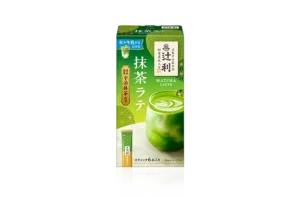
The Starbucks Premium Mix matcha latte sold in Japan is a well-known example, made for the Japanese market by Nestlé Japan in 24 g sticks at about 103 kcal each. Nestlé’s own announcement describes it as a distinctly Japanese flavour that is popular with visitors to the country, and sells it through airport souvenir shops and convenience stores.
Matcha Milk Powder
Close to a latte powder, with one practical difference the makers state explicitly on the pack: it dissolves in cold water and cold milk, not just hot water. If you want iced matcha rather than hot, this is the format to look for, because a powder that only dissolves hot will leave you stirring lumps in a cold glass.
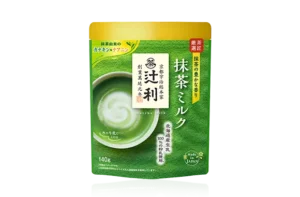
The example above is built on milk powder made from Hokkaido milk, and its ingredient list runs sugar, glucose, creaming powder, skimmed milk powder, then matcha. That order matters, and the next section explains why.
Rich and Koicha-Style Versions
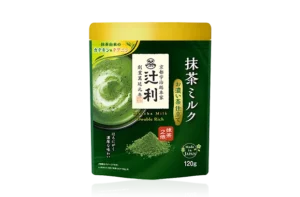
Several makers sell a stronger version of the same product alongside the standard one, usually labelled koicha-jitate or simply “rich”. These use more matcha, so the result is more bitter and less milky-sweet. On the Japanese shelf this is the closest thing to a grade, and it is a recipe difference rather than a quality classification.
“Just Add Milk” Mixes
These contain no milk powder. One Uji matcha version is made from matcha, sugar and wasanbon sugar and nothing else, which makes it the shortest ingredient list on this page. You supply the milk, and because you supply it, soy milk, almond milk and oat milk all work.
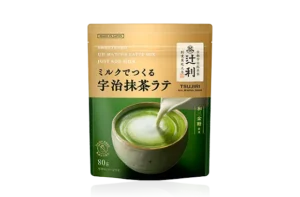
This is the format to choose if you are dairy-free, if you want a stronger or weaker drink than the bag intends, or if you simply want fewer ingredients.
Flavoured Blends
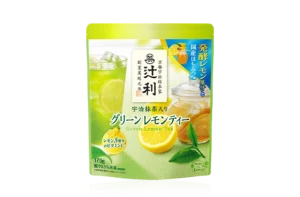
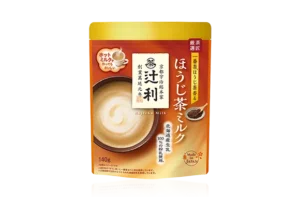
Matcha is also blended into other drinks. Green lemon tea with matcha and fermented lemon juice is a summer product; a roasted-tea milk powder built on hojicha rather than matcha appears in autumn and winter. These rotate seasonally, so availability is not constant.
Unsweetened Matcha That Dissolves
The bridge between the two halves. This is matcha with no sugar and no milk, processed so that it disperses in water or milk without a whisk. You can drink it plain, build your own latte with the sweetness you want, or use it in baking and cooking, which you cannot sensibly do with a sweetened latte mix.
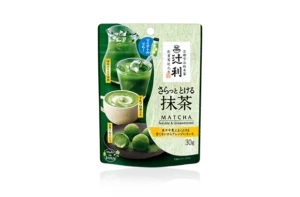
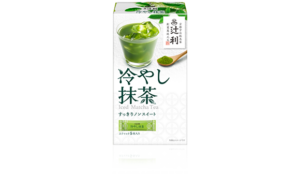
There are unsweetened stick formats too, sold for cold matcha, which give you a measured portion without any sugar attached.
Drinking Matcha
Finally, the real thing: tencha ground into powder, sold in small tins, with nothing added. This is a different purchase. It is sold under product names rather than grades, it costs several times more per gram than anything above, and it does not dissolve — it suspends, which is why a bamboo whisk exists. Japanese makers separate it from the rest of their range as tea-ceremony and drinking matcha, with a parallel line sold for confectionery and food manufacturing.
It is worth knowing this category is there, and worth knowing it is not what the latte powders are. Whether you need it depends entirely on whether you want to make tea or make a latte.
Order Japanese Matcha Powder Worldwide
Powders are light and shelf-stable, so they travel well. Duties shown at checkout, tracked delivery in about 7 to 14 days.
Shop on kachicollectHow to Read the Label
There is no grading system for matcha in Japan. No government body or trade association certifies a powder as one level or another, and the tiers you may have seen used in English are not Japanese classifications. What you can rely on instead is the ingredient list, because Japanese labelling law requires ingredients in descending order by weight.
Find where matcha appears in the list. That single fact tells you more than anything on the front of the bag. Two real examples:
| Product | Ingredient order | Matcha position |
|---|---|---|
| A rich Kyoto Uji matcha latte | Sugar, whole milk powder, tea (matcha), dextrin, corn syrup… | 3rd |
| A standard matcha milk | Sugar, glucose, creaming powder, skimmed milk powder, matcha… | 5th |
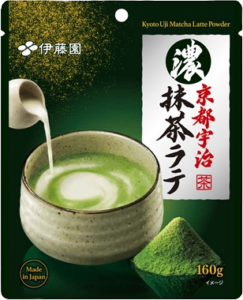
Both are good products for what they are. But the first contains noticeably more matcha than the second, and no wording on the front of either bag would have told you that.
Check whether the origin is named. Some labels specify the growing region, for example matcha from Kyoto Prefecture. Others just say “matcha”. A named origin is a commitment; an unnamed one is not.
Look for what has been left out. Japanese makers advertise this directly. Some latte powders state they contain no flavouring, no artificial sweetener and no emulsifier. Others are sold explicitly as unsweetened so you can add your own sugar. If the bag makes a point of an omission, it tells you what the standard version contains.
How to Drink It
Hot. Follow the serving size on the pack rather than guessing, because these mixes are formulated to a ratio. One rich latte powder is built around 16 g per cup; a stick pack is a single measured serving by design. Water just off the boil is fine for mixes.
Iced. Check the bag says it dissolves cold before you try it. Where it does, pour the powder into cold milk or cold water and stir; where it does not, dissolve it in a splash of hot water first, then pour it over ice.
With plant milk. Use a “just add milk” mix and soy, almond or oat milk to taste. The mixes that already contain milk powder will still work with plant milk, but you are adding milk to milk.
In cooking. Use unsweetened matcha, not a latte mix. Latte powder is mostly sugar and milk solids, so it will throw off a recipe’s balance and mute the colour. Unsweetened dissolving matcha works in cakes, ice cream, whipped cream and glazes.
As tea. This is where pure matcha differs mechanically. It does not dissolve, so stirring leaves powder at the bottom of the bowl. Sift it, add a little hot water below boiling, and whisk briskly with a bamboo whisk until a fine foam forms. Thin and thick preparations use the same powder in different ratios — more powder and less water makes the thick style.
Why These Don’t Reach Overseas Shelves
The powders on this page are made for the Japanese domestic market. They are formulated for Japanese tastes, labelled in Japanese, and distributed through Japanese retail, and most of them never enter an export channel at all. Where a brand is internationally famous, the specific product can still be Japan-only: the Starbucks matcha latte mix is a Nestlé Japan product positioned as a Japanese flavour for visitors, not a global line.
The practical upshot is that the range available to you outside Japan is a narrow slice of what exists, usually only the best-known bags. Seasonal items, unsweetened versions and the “just add milk” formats tend not to appear at all.
How to Buy Japanese Matcha Powder
Order From the kachicollect Catalog
kachicollect is a Japan-based shop carrying only products made for the Japanese market, including Japanese tea. You pay the listed price plus shipping with no proxy fees, and the total including duties is shown at checkout before you pay. Payment is in your local currency by Visa, Mastercard or JCB, so you do not need a Japanese address or card, and orders ship worldwide with tracking in about 7 to 14 days. Powder is light and shelf-stable, which makes it one of the easier categories to ship.
Request a Specific Product by URL
If you want a particular bag — a seasonal flavour, an unsweetened version, a specific maker’s rich edition — send us the product link from a Japanese site and you will get an instant quote, then buy it directly on kachicollect with no service fees. That covers Japanese marketplace listings in general, which is how you reach the products that never leave the domestic market.
Frequently Asked Questions
Is matcha latte powder the same as matcha?
No. Matcha is tencha ground to a powder, with nothing added. A matcha latte powder is a drink mix in which sugar is normally the first ingredient and matcha is one component among several. Both are legitimate products; they are not substitutes for each other.
Which type has the most matcha in it?
Unsweetened matcha, by a wide margin, since it is all matcha. Among the sweetened mixes, compare ingredient lists rather than front-of-pack wording: the higher matcha sits in the list, the more of it there is. Products labelled rich or koicha-style use more than their standard counterparts.
Can I make these with cold milk?
Only if the pack says so. Cold solubility is a formulation choice, and Japanese makers state it plainly when a product has it. If yours does not, dissolve the powder in a little hot water first and then add the cold milk.
Does matcha powder contain caffeine?
Yes. Matcha is made from whole tea leaves, so it contains caffeine, and a drink mix contains it in proportion to how much matcha it holds. An unsweetened matcha will therefore carry more per gram than a sweetened latte mix.
How should I store it and how long does it keep?
Keep it sealed, away from sunlight, heat and humidity, and refrigerate in hot weather. Matcha absorbs surrounding smells readily, so an airtight container matters more than the printed date. Once opened, use it well before the best-before date rather than up to it; colour and aroma fade first.
Do these contain dairy?
Most latte and milk powders do, and Japanese labels declare milk in the allergen line. The “just add milk” mixes and unsweetened matcha do not. Check the allergen statement on the pack itself, as formulations change.
Conclusion
The word on the front of the bag is the least informative thing about it. Sugar first and matcha fifth is a latte powder; no sugar at all is matcha you can cook with; a small tin with a product name and no grade on it is tea. Decide which of those three you actually want, then read the ingredient list to confirm you are holding it.
The kachicollect catalog carries Japanese tea alongside a wide selection of other Japan-only products you can order directly, and anything not listed can be requested by sending the product link. You pay the item price plus shipping with no proxy fees, see the total including duties before checkout, and first-time customers can use the code WELCOME20 for 20% off.
Order Japanese Matcha From Japan
Products made for the Japanese market, shipped worldwide with tracking in about 7 to 14 days. Use code WELCOME20 for 20% off your first order.
Shop Now at kachicollect