Outside Japan, almost everything chewy and rice-based gets called mochi. In Japan these are separate things with separate names, and the differences are not academic: one is a pantry staple you grill, one is a fresh cake you eat the same day, one is a jelly-like dessert that contains no rice at all.
Here is what each one actually is, what it tastes and feels like, and which of them you can realistically have shipped to you.
Japanese Sweets, Direct From Japan
kachicollect only carries products made for the Japanese market. No proxy fees, and duties are shown before you pay.
Shop on kachicollectThe Quick Answer
| Name | What it is | Texture | Sweet or savoury | Served | Can you order it? |
|---|---|---|---|---|---|
| Kirimochi | Plain mochi in hard blocks you heat before eating | Stretchy, molten when hot | Either, depending on topping | Hot | Yes, shelf-stable |
| Snack mochi | One-bite flavoured mochi in a resealable pouch | Soft, chewy | Sweet | Room temperature | Yes, shelf-stable |
| Daifuku | Mochi wrapped around a filling | Soft outside, smooth filling | Sweet | Room temperature | Only shelf-stable versions |
| Ohagi / botamochi | Partly crushed rice with the paste on the outside | Grainy, rustic | Sweet | Room temperature | No, fresh only |
| Dango | Rice-flour dumplings, usually on a skewer | Springy, firmer than mochi | Either | Warm or cool | Some shelf-stable types |
| Shiratama | Small boiled rice-flour balls | Soft, slippery | Sweet | Cold | No, made fresh |
| Gyuhi | Rice flour cooked with sugar, stays soft | Very soft, silky | Sweet | Room temperature | Usually as part of another sweet |
| Warabimochi | Starch jelly coated in kinako, no rice | Wobbly, melting | Sweet | Cool | Yes, shelf-stable versions exist |
| Kuzumochi | Starch cake, completely different east and west | Firm or translucent | Sweet | Cool | Rarely |
| Mochi ice cream | Ice cream in a thin mochi shell | Cold, chewy shell | Sweet | Frozen | No, frozen |
If you only remember one thing: dango is not mochi. Mochi is made from whole glutinous rice grains that have been pounded into a mass. Dango is made from rice flour that is kneaded with water and then steamed or boiled. That is why dango is springier and holds its ball shape, while mochi stretches and sags.
The Ones You Eat Straight From the Pack
The easiest entry point, and the group most likely to survive an international parcel. These are one-bite mochi pieces with the flavour worked into the dough, sealed individually and sold in a resealable pouch at room temperature. No refrigeration, no preparation, nothing to cook.
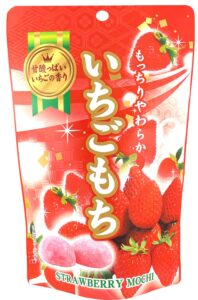
Flavours are where this category gets interesting, because Japanese makers specify the produce down to the growing region: Fukuoka Amaou strawberry, Hokkaido melon, Uji matcha from Kyoto, Setouchi lemon. There are also flavours built on Japanese soft drinks that have no overseas equivalent, such as ramune and melon soda.
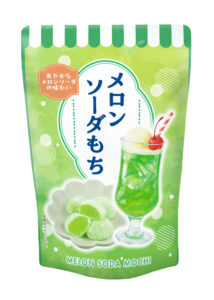
Our guide to Japanese mochi snack flavours covers the full range of 23 and what goes into each one.
The Ones You Cook
Kirimochi is plain mochi dried at the surface and sealed in blocks. It keeps for up to two years at room temperature, and it is inedible until you heat it: three to four minutes in a toaster oven and it swells, splits and turns molten inside.
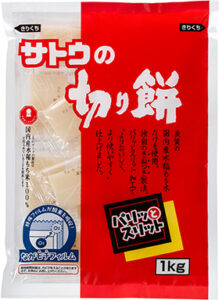
This is the mochi that goes into ozoni, the New Year soup, and into isobeyaki, where a grilled piece is brushed with soy sauce and wrapped in nori. It is a pantry staple rather than a sweet, and whether it ends up sweet or savoury depends entirely on what you put on it.
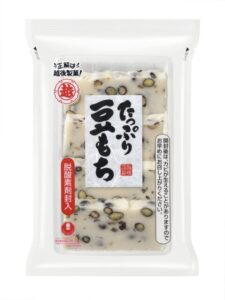
Japan sells it in shapes that never reach export shelves: sticks for rolling in nori, paper-thin sheets for hotpot, slices for toast, and versions with black soybeans or mugwort pounded into the dough. See how to cook kirimochi for the four official methods and the full range of types.
The Ones With Something Inside
Daifuku
Daifuku is mochi wrapped around a filling, most often sweet red bean paste. The mochi layer is thinner and softer than a block of kirimochi, and in commercial products it is often gyuhi rather than pounded mochi, because gyuhi stays soft.
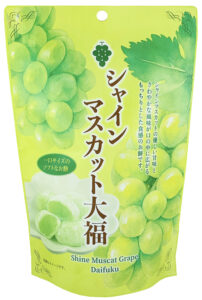
Fresh daifuku from a Japanese confectionery counter lasts a day or two, which rules out shipping. Shelf-stable versions exist in the snack-pouch format, made with fruit like Shine Muscat grape or with dried sweet potato, and those travel fine.
Ohagi and Botamochi
The construction is inverted: instead of mochi on the outside and paste inside, ohagi is a ball of rice with the sweet paste on the outside. The rice is only partly crushed, so you can still see and feel individual grains, which makes the texture rustic rather than smooth.
These are made fresh and eaten the same day. There is no shelf-stable version, so this is one to eat in Japan rather than order.
The Ones That Aren’t Really Mochi
Dango
Dango is made from rice flour kneaded with water, formed into balls and then steamed or boiled. The usual presentation is three or four balls on a bamboo skewer. It is denser and springier than mochi and it does not stretch the same way.
Kusa dango is the mugwort version, green from the herb worked into the dough, usually with red bean paste and a heavy dusting of kinako. Some versions are individually wrapped and shelf-stable for around 90 days, which does make them shippable.
Shiratama
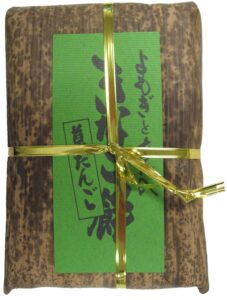
Small balls made from shiratamako, a flour milled from glutinous rice by a wet process, then boiled and dropped into cold water. They are soft and slippery rather than chewy, and they turn up floating in anmitsu, shaved ice and sweet soups. Made to order, so not something you buy in a packet.
Gyuhi
Gyuhi is rice flour cooked with sugar or syrup and water. The sugar is the whole point: it holds onto moisture and stops the starch from re-setting, so gyuhi stays soft for days while plain mochi goes hard within hours. That is why it lines daifuku, sits inside mochi ice cream shells, and shows up as the soft layer in all sorts of Japanese sweets. You rarely buy it on its own.
Warabimochi
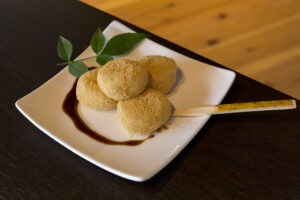
Warabimochi contains no rice at all. It is a starch jelly, cut into cubes, dusted heavily with kinako and usually eaten with kuromitsu syrup poured over. The texture is wobbly and melting, closer to a set jelly than to anything pounded.
There is one thing worth knowing before you buy. Warabimochi is named after warabi, bracken, but most of what is sold is not made from bracken starch. Commercial products fall into three grades:
| Grade | What’s in it | What to expect |
|---|---|---|
| 100% honwarabiko | Real bracken starch only | Dark, deeply flavoured, expensive, specialist shops |
| Blended | A few percent bracken starch, the rest sweet potato starch | Labelled “with real bracken”, the middle option |
| No bracken | Sweet potato or tapioca starch only | The clear, pale kind in supermarkets |
Neither is wrong, but they taste different, so check the label rather than the name. Shelf-stable pouch versions exist with a kuromitsu sachet included, and those can be shipped.
Kuzumochi
Kuzumochi is two completely different sweets that share a name, split along the east-west line. In the Kansai region, kuzumochi is made from kudzu root starch and is translucent and glossy. In Kanto it is made from wheat starch that has been lactic-fermented and then steamed, which produces something white, dense and firm with a slightly sour edge.
Both are served with kinako and kuromitsu, which is why they look related on the plate. The Kanto version is relevant if you avoid wheat, as covered in the FAQ below.
Order Japanese Sweets Worldwide
Room-temperature products, shipped with tracking in about 7 to 14 days. Duties shown at checkout, before you pay.
Shop on kachicollectWhat You Can Actually Order
The dividing line is not how good something is, it is whether it survives two weeks in a parcel. Japanese confectionery splits cleanly into shelf-stable and fresh, and the fresh half simply cannot be sent.
| Can be shipped | Cannot be shipped |
|---|---|
| Snack mochi pouches, 150-day shelf life | Mochi ice cream and anything frozen |
| Kirimochi, up to 24 months | Fresh daifuku from a confectionery counter |
| Shelf-stable daifuku in pouch format | Ohagi and botamochi |
| Wrapped kusa dango, around 90 days | Fresh shiratama |
| Warabimochi pouches with syrup sachets | Regional fresh mochi souvenirs with short dates |
If a Japanese sweet you have read about is not on the left-hand column, it is almost certainly because it is made to be eaten within a day or two. That is a property of the sweet, not a limitation of any particular shop.
How to Order
Order From the kachicollect Catalog
kachicollect is a Japan-based shop carrying only products made for the Japanese market. You pay the listed price plus shipping with no proxy fees, and the total including duties is shown at checkout before you pay. Payment is in your local currency by Visa, Mastercard or JCB, so you do not need a Japanese address or card, and orders ship worldwide with tracking in about 7 to 14 days.
Request a Specific Item by URL
If you have found something specific on a Japanese site, send us the product link and you will get an instant quote, then buy it directly on kachicollect with no service fees. That covers Japanese marketplace listings in general, which matters for the flavours and formats that never enter an export channel.
Frequently Asked Questions
Is mochi gluten-free?
Plain mochi is made from glutinous rice, and despite the name there is no gluten in it. The word “glutinous” describes the sticky texture, not the protein. Rice-based sweets such as mochi, dango, shiratama and gyuhi contain no wheat.
The exception is Kanto-style kuzumochi, which is made from wheat starch. It is wheat-derived, so treat it as unsuitable unless you have checked the specific product. As always with allergens, read the pack rather than relying on the category.
Is mochi vegan?
Plain mochi is rice and water, and red bean paste and kinako are plant-based, so the traditional forms generally are. Packaged products are a different matter: the shelf-stable snack mochi pouches, for example, all list milk in their allergen information. Check the label on anything processed.
What’s the difference between mochi and mochi ice cream?
Mochi ice cream is a frozen dessert with an ice cream centre and a thin mochi or gyuhi shell, developed for the freezer cabinet. Everything else on this page is stored at room temperature or eaten fresh. They share a wrapper material and nothing else.
Is dango the same as mochi?
No. Mochi is pounded from whole glutinous rice grains; dango is kneaded from rice flour and water, then steamed or boiled. Dango is firmer and springier, keeps its round shape, and is usually served on a skewer.
Which one should I try first?
If you want something you can open and eat immediately, start with the flavoured snack mochi pouches. If you would rather cook, kirimochi with soy sauce and nori is the classic first thing to make and it takes four minutes.
Conclusion
Mochi is the pounded rice itself. Daifuku is mochi with a filling, dango is a flour dumpling and not mochi at all, gyuhi is the soft sweetened version that lines other sweets, and warabimochi and kuzumochi are starch jellies that borrowed the word. Knowing which is which is mostly about knowing what texture you are going to get and whether it can reach you.
The kachicollect catalog carries a wide selection of Japan-only sweets you can order directly, and anything not listed can be requested by sending the product link. You pay the item price plus shipping with no proxy fees, see the total including duties before checkout, and first-time customers can use the code WELCOME20 for 20% off.
Order Japanese Mochi From Japan
Products made for the Japanese market, shipped worldwide with tracking in about 7 to 14 days. Use code WELCOME20 for 20% off your first order.
Shop Now at kachicollect