The easiest mochi recipe needs three ingredients and a microwave: glutinous rice flour, water and sugar, mixed in a bowl and heated twice. In about ten minutes you have soft, stretchy mochi you can eat plain, drizzle with maple syrup, or wrap around a strawberry.
Below are ten easy mochi recipes, all based on official recipes from Japanese mochi and rice-flour makers. Three make mochi from scratch with flour, five are Western-style ideas using store-bought kirimochi, and two are simple Japanese classics. If you want to know what mochi actually is before you start, see our guide to what mochi is.
Japanese Mochi, Direct From Japan
kachicollect only carries products made for the Japanese market. No proxy fees, and duties are shown before you pay.
Shop on kachicollectThe 10 Recipes at a Glance
| # | Recipe | Base | Ingredients | Style |
|---|---|---|---|---|
| 1 | Microwave mochi | Shiratamako flour | 3 | Basic |
| 2 | Shiratama dango | Shiratamako flour | 2 | Japanese |
| 3 | Strawberry daifuku | Shiratamako flour | 5 | Japanese |
| 4 | Butter-fried mochi with maple syrup | Kirimochi | 6 | Western |
| 5 | Mochi waffles | Kirimochi | 4 | Western |
| 6 | Mochi pizza | Kirimochi | 7 | Western |
| 7 | Chocolate fondue mochi | Kirimochi | 3 | Western |
| 8 | Mochi with ice cream and anko | Kirimochi | 3 | Western |
| 9 | Anko butter mochi | Kirimochi | 3 | Japanese |
| 10 | Microwave milk oshiruko | Kirimochi | 3 | Japanese |
What You Need
The Right Flour
Mochi is made from glutinous rice, so the flour has to be glutinous rice flour too. Ordinary rice flour, including Japanese joshinko, will not turn stretchy, and wheat flour will not work at all.
| Flour | Made from | How it is made | For mochi? |
|---|---|---|---|
| Shiratamako | Glutinous rice | Soaked, wet-ground, pressed and dried into small granules | Yes, the smoothest result |
| Mochiko (mochi-ko) | Glutinous rice | Ground dry into a fine powder | Yes |
| Joshinko | Ordinary rice | Ground dry | No, it makes firmer dango |
The recipes below use shiratamako, which Japanese makers describe as giving smoother dumplings that stay soft longer. The flour sold as “mochiko” or “sweet rice flour” outside Japan is usually the dry-ground type, and its main maker lists microwave mochi as one of its uses. It works for these recipes, but it is a different product, so you may need to adjust the water a little until the dough feels right.
Or Just Use Kirimochi
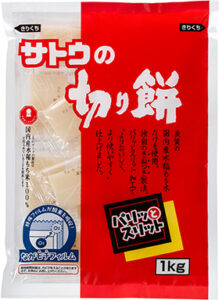
Seven of the ten recipes skip the flour entirely and start from kirimochi, the hard, individually wrapped blocks of plain mochi sold in every Japanese supermarket. They keep at room temperature and soften in a few minutes in a pan, toaster or microwave. Our guide to how to cook kirimochi covers the four basic heating methods.
Other things to have ready: a microwave-safe bowl, a spatula, and potato starch or cornstarch for dusting so the mochi does not stick to your hands. The microwave times in this article are for a 600 W microwave; if yours is more powerful, start with a shorter time and check.
Make Mochi From Scratch
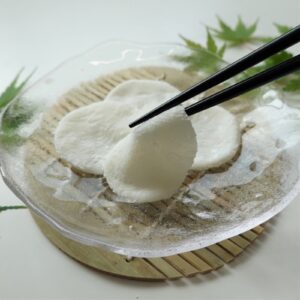
1. Microwave Mochi (3 Ingredients)
This is the base recipe, from shiratamako maker Maeharaseifun. It takes about ten minutes and is the dough you will also use for daifuku.
| Ingredient | Amount |
|---|---|
| Shiratamako | 150 g |
| Water | 180 g |
| Sugar | 4 tbsp |
Step 1. Mix the shiratamako and sugar in a microwave-safe bowl, then add the water a little at a time, stirring until smooth.
Step 2. Cover with cling film and microwave at 600 W for about 1 minute 30 seconds.
Step 3. Take it out and stir well with a spatula. If you still see white, floury patches, microwave for about 30 seconds more.
Step 4. Turn it out onto a tray dusted with potato starch or cornstarch and divide it into pieces. It is extremely hot straight out of the microwave, so let it cool slightly first.
Serving idea: for a Western twist, eat the pieces warm with a drizzle of maple syrup or honey. This is our suggestion rather than part of the original recipe, but the mild, sweet dough takes syrup very well.
2. Shiratama Dango (2 Ingredients)
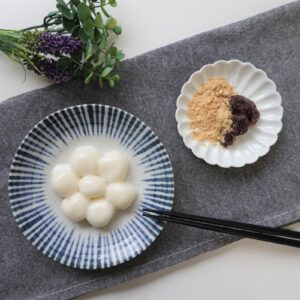
The simplest mochi there is: flour and water, rolled into balls and boiled. No microwave needed. This makes about 20 small dumplings, enough for four.
| Ingredient | Amount |
|---|---|
| Shiratamako | 100 g |
| Water | 90 to 95 g |
Step 1. Add the water to the flour a little at a time and knead until the dough is slightly firmer than an earlobe.
Step 2. Roll into balls about 1.5 cm across. Pressing a small dent in the middle of each one helps them cook through.
Step 3. Drop them into boiling water. When they float, boil for about 2 more minutes, then move them into cold water.
Step 4. Once cool, drain and serve with sweet red bean paste or kinako. They are also good in fruit salad or with a drizzle of syrup.
3. Strawberry Daifuku (5 Ingredients)
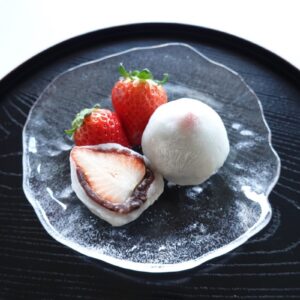
Strawberry daifuku is a whole strawberry wrapped in sweet red bean paste and then in a thin layer of mochi. It uses exactly the same dough as recipe 1. Leave out the strawberry and you have plain daifuku. This makes 15 pieces.
| Ingredient | Amount |
|---|---|
| Strawberries | About 15 |
| Sweet red bean paste (anko) | 300 g |
| Shiratamako | 150 g |
| Water | 180 g |
| Sugar | 4 tbsp |
Step 1. Wash and hull the strawberries and pat them dry. Divide the bean paste into 15 portions and wrap each strawberry, leaving the tip showing.
Step 2. Make the microwave mochi from recipe 1 and divide it into 15 pieces.
Step 3. With starch-dusted hands, flatten a piece of mochi into a circle, set a strawberry on it tip down, and pull the edges up to close it.
Step 4. Set it seam side down, shape it round and brush off the excess starch.
Western-Style Mochi Recipes
Plain mochi tastes of very little, which makes it a natural partner for butter, syrup, cheese and chocolate. These five recipes all start from kirimochi and come from Japanese makers’ own recipe pages.
4. Butter-Fried Mochi With Maple Syrup (6 Ingredients)
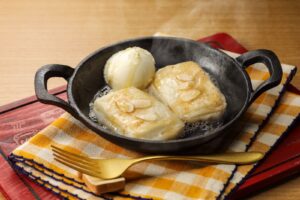
Crisp outside, soft inside, with maple syrup and cream cheese. This one is from kirimochi maker Sato Foods and serves one.
| Ingredient | Amount |
|---|---|
| Kirimochi | 2 pieces |
| Water | 1 tbsp |
| Butter | 8 g |
| Maple syrup | 1 tbsp |
| Cream cheese | 18 g |
| Sliced almonds | To taste (optional) |
Step 1. Put the mochi in a frying pan over high heat. After about 1 minute, when they are warm, add the water and cover straight away.
Step 2. After about 1 more minute, when the water has mostly gone, turn off the heat and leave the lid on for about 3 minutes.
Step 3. Remove the lid, add the butter, and fry over high heat until the surface is crisp.
Step 4. Plate, pour over the maple syrup, scatter the almonds and add the cream cheese on the side.
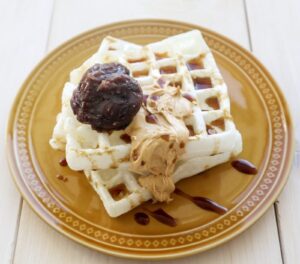
5. Mochi Waffles (4 Ingredients)
Put a block of kirimochi in a waffle maker and it melts into a crisp, chewy waffle in about a minute. The method comes from Japanese spreads maker Sonton, whose original recipe uses its own branded toppings and kuromitsu (Japanese black sugar syrup). The toppings below are our substitutes for ingredients that are hard to find outside Japan.
| Ingredient | Amount |
|---|---|
| Kirimochi | 2 to 3 pieces |
| Sweet red bean paste | 2 tbsp |
| Whipped cream | To taste |
| Maple syrup or honey (kuromitsu in the original) | To taste |
Step 1. Preheat the waffle maker.
Step 2. Place one piece of mochi in the centre and close the lid. It will not close fully at first, but it will as the mochi melts. Cook for about 1 minute, then repeat with the rest.
Step 3. Top with whipped cream and red bean paste, then drizzle with syrup.
6. Mochi Pizza (7 Ingredients)
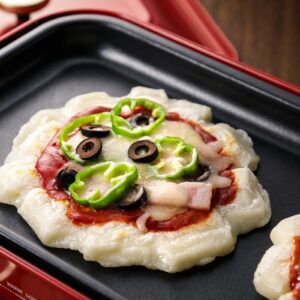
Kirimochi makes a chewy, wheat-free pizza base. Sato Foods’ recipe makes two pizzas for four people on a hot plate; a large frying pan with a lid works the same way.
| Ingredient | Amount |
|---|---|
| Kirimochi | 8 pieces |
| Pizza cheese | 80 g |
| Thin-sliced bacon | 4 slices |
| Green pepper | 1/2 |
| Tomato ketchup | 3 tbsp |
| Black olives | 5 to 6 |
| Vegetable oil | 1/2 tbsp |
Step 1. Break each piece of mochi into four by hand and soak in water for 5 to 10 minutes.
Step 2. Oil the hot plate or pan, drain the mochi and lay the pieces close together. Cook over medium heat.
Step 3. After 1 to 2 minutes, sprinkle over a little water, cover and let it steam. After 2 to 3 minutes, when the pieces have joined, flip it over.
Step 4. Spread with ketchup, add the cheese, bacon, pepper and olives, cover and cook for another 2 to 3 minutes.
7. Chocolate Fondue Mochi (3 Ingredients)
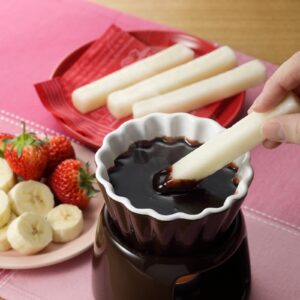
Toasted mochi dipped in warm chocolate. Sato Foods’ recipe uses its stick-shaped mochi; ordinary kirimochi cut into strips works too.
| Ingredient | Amount |
|---|---|
| Kirimochi | 3 sticks, or 2 to 3 pieces cut into strips |
| Chocolate bar | 1 |
| Milk | 20 ml |
Step 1. Warm the milk over low heat, break in the chocolate and let it melt. High heat will burn it.
Step 2. Toast the mochi in a toaster oven until puffed.
Step 3. Dip the mochi in the chocolate. Strawberries and banana on the side make it a proper fondue.
8. Mochi With Ice Cream and Anko (3 Ingredients)
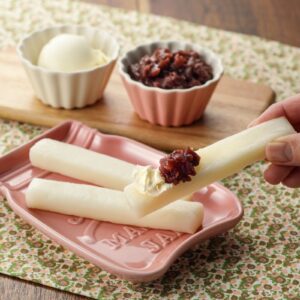
Hot, chewy mochi dipped into cold ice cream and sweet red bean paste. Another stick-mochi recipe from Sato Foods, which also suggests matcha ice cream.
| Ingredient | Amount |
|---|---|
| Kirimochi | 3 sticks, or 2 to 3 pieces cut into strips |
| Sweet red bean paste | 50 g |
| Ice cream | 30 g |
Step 1. Toast the mochi in a toaster oven.
Step 2. Put the ice cream and red bean paste in small dishes and dip the hot mochi into both.
Get Kirimochi From Japan
Room-temperature Japanese mochi, shipped worldwide with tracking. Duties shown at checkout, before you pay.
Shop on kachicollectEasy Japanese Classics
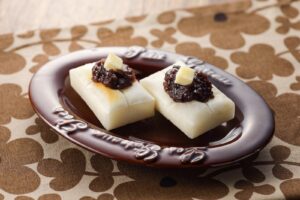
9. Anko Butter Mochi (3 Ingredients)
A modern Japanese favourite: toasted mochi with sweet red bean paste and butter, salty and sweet at once. From Sato Foods, for one person.
| Ingredient | Amount |
|---|---|
| Kirimochi | 2 pieces |
| Sweet red bean paste | 30 g |
| Butter | To taste |
Step 1. Toast the mochi in a toaster oven.
Step 2. Top with the bean paste and butter. For butter that soaks in, put the mochi on foil with the butter on top before toasting, and add the bean paste afterwards.
10. Microwave Milk Oshiruko (3 Ingredients)
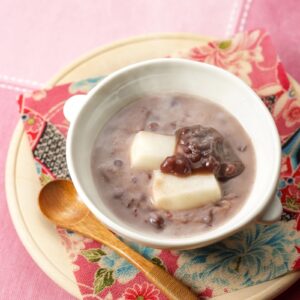
Oshiruko is mochi in warm, sweet red bean soup. This version uses milk and one cup, and takes about two minutes in the microwave. Swap the milk for water and you have traditional oshiruko.
| Ingredient | Amount |
|---|---|
| Kirimochi | 1 piece |
| Milk | 50 ml |
| Sweet red bean paste | 30 g |
Step 1. Put the milk and bean paste in a large microwave-safe cup or bowl and stir lightly.
Step 2. Cut the mochi into four, add it, and microwave for about 2 minutes. Stop as soon as the mochi starts to puff, or it will go too soft.
Two more classics, kinako mochi and isobeyaki with soy sauce and nori, are covered with the other toppings in our kirimochi guide.
Storage and Safety
Homemade mochi is best eaten the day you make it. As it cools, the starch firms up and the mochi gradually turns hard, which is why fresh mochi does not keep the way kirimochi does. Kirimochi itself stays sealed at room temperature until you open it.
Mochi is also a genuine choking hazard, particularly for older people and small children. Cut it into small pieces, take small bites, chew thoroughly, and keep an eye on anyone at risk while they eat. There is more on this in our guide to what mochi is.
Get Japanese Mochi and Ingredients Direct
Order From the kachicollect Catalog
kachicollect is a Japan-based shop carrying only products made for the Japanese market, including the kind of mochi these recipes are built on. You pay the listed price plus shipping with no proxy fees, and the total including duties is shown at checkout before you pay. Payment is in your local currency by Visa, Mastercard or JCB, so you do not need a Japanese address or card, and orders ship worldwide with tracking in about 7 to 14 days.
Request Ingredients by URL
Japanese shiratamako, kinako and kuromitsu are the ingredients people struggle to find abroad. If something is not in the catalog, send the product link from a Japanese site and you will get an instant quote, then buy it directly on kachicollect with no service fees. That covers Japanese marketplace listings in general.
Proxy services such as Buyee, ZenMarket and FROM JAPAN can also buy from Japanese sites for you, but the fee shown upfront is only the starting point, and other costs are usually added along the way. They also buy at Japanese retail prices that include Japan’s 10% domestic consumption tax and pass it on to you, while kachicollect sells for export. A kachicollect purchase request gives you the same access without proxy fees, with the total including duties shown before you pay.
Frequently Asked Questions
Can I make mochi with regular rice flour?
No. You need glutinous rice flour, such as shiratamako or mochiko. Flour from ordinary rice will not become stretchy, and wheat flour will not work at all.
Why is my mochi too sticky to handle?
Freshly cooked mochi is always sticky. Dust your hands, the tray and the spatula generously with potato starch or cornstarch, and let the mochi cool for a moment before shaping it.
Why is there still a floury patch in my microwave mochi?
It has not cooked through. Stir well and microwave in short bursts of about 30 seconds until no white, floury patches are left.
Can I make mochi without a microwave?
Yes. Shiratama dango (recipe 2) only needs a pot of boiling water, and every kirimochi recipe here can be made with a frying pan or toaster oven.
Is homemade mochi gluten-free?
Glutinous rice flour contains no gluten, despite the name. Check your toppings and any packaged ingredients, though, since some sauces and sweets do.
Conclusion
The easiest mochi recipe is three ingredients and two rounds in the microwave. From there, the same dough becomes strawberry daifuku, and with a pack of kirimochi you can make maple-syrup mochi, mochi waffles, mochi pizza or chocolate fondue in minutes, all without any special skills.
The simplest way to get started is with real Japanese mochi. The kachicollect catalog carries Japan-only mochi and sweets you can order directly, and ingredients that are not listed, such as shiratamako or kinako, can be requested by sending the product link. You pay the item price plus shipping with no proxy fees, see the total including duties before checkout, and first-time customers can use the code WELCOME20 for 20% off. If you would rather skip the cooking, see our guide to Japanese mochi snack flavours, and for the differences between daifuku, dango and more, the different types of Japanese mochi.
Order Japanese Mochi From Japan
Products made for the Japanese market, shipped worldwide with tracking in about 7 to 14 days. Use code WELCOME20 for 20% off your first order.
Shop Now at kachicollect